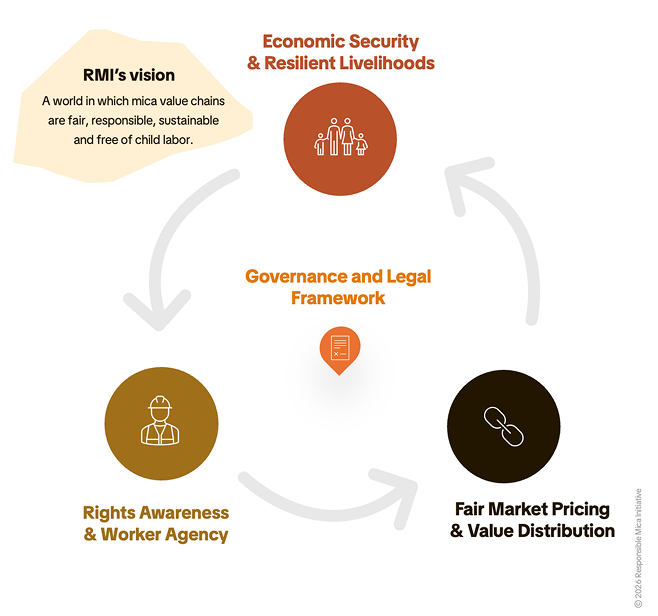
Our Theory of Change: connecting actions to impact
How RMI maps its impact
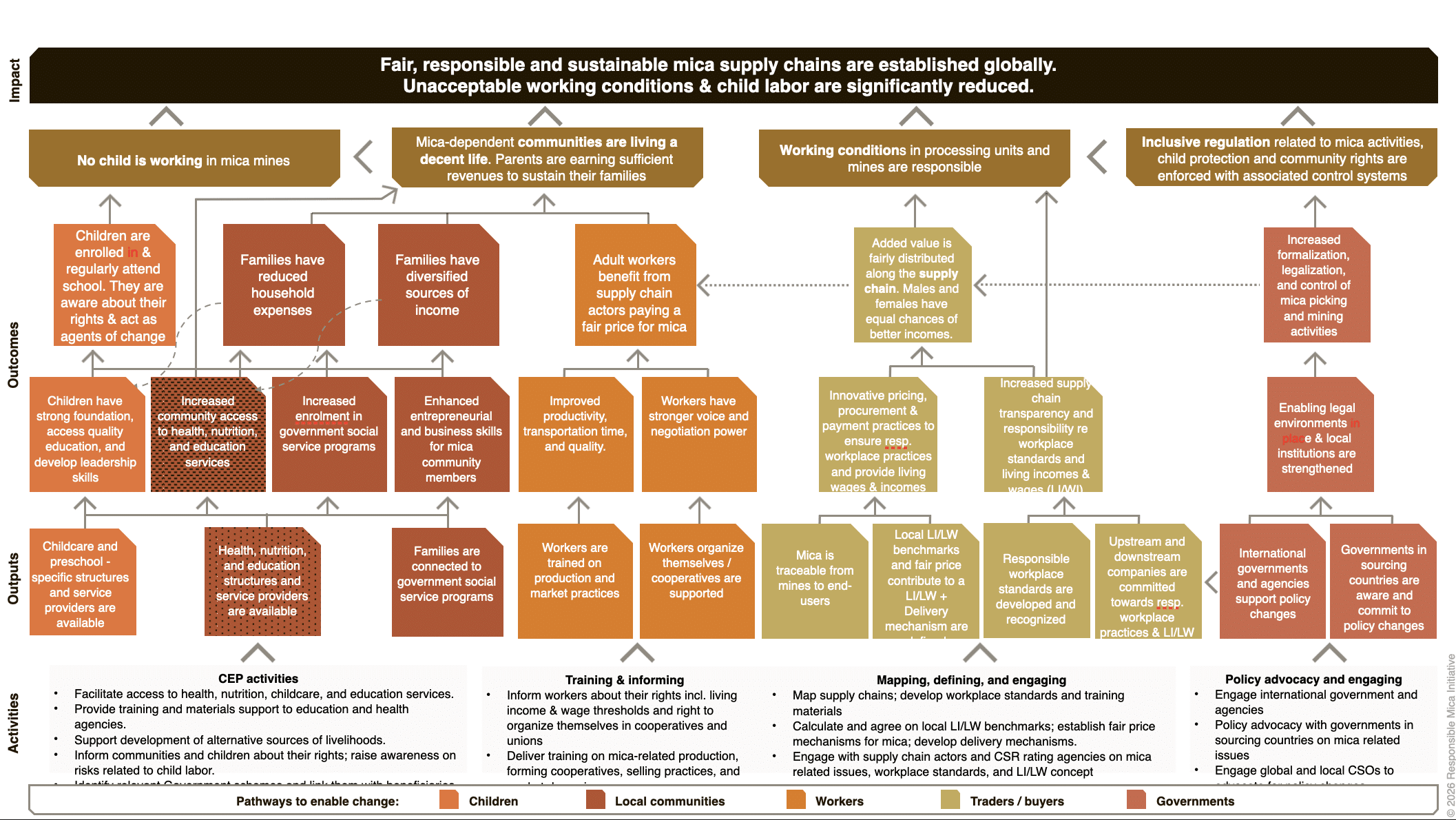
The Responsible Mica Initiative uses a Theory of Change to frame the broader impact areas of its fit-for-purpose programs and deliver tangible change through longer term outcomes on the ground. This framework identifies the causal relationship between specific activities and their short-term, medium-term, and long-term impact and ensure that every action contributes to lasting change in mica supply chains. By clearly mapping the paths from interventions on ground to measurable impacts, the Theory of Change enables RMI to design more effective programs, identify gaps in activity, and establish indicators to monitor progress. The framework provides a roadmap for achieving sustainable improvements while reinforcing strategic alignment across all initiatives.
RMI’s global Theory of Change
The global Theory of Change integrates RMI’s three program pillars – Transparency & Workplace Standards, Legal Frameworks & Governance and Workers & Community Empowerment – and demonstrates how coordinated actions across areas all three pillars lead to meaningful transformation in the mica sector. Specific programs, such as the multifaceted Community Empowerment initiative in India, have also been guided by more granular intervention-based Theories of Change developed with expert partners such as Im-Prove, to ensure relevance and integrate practical, evidence-based needs assessments.
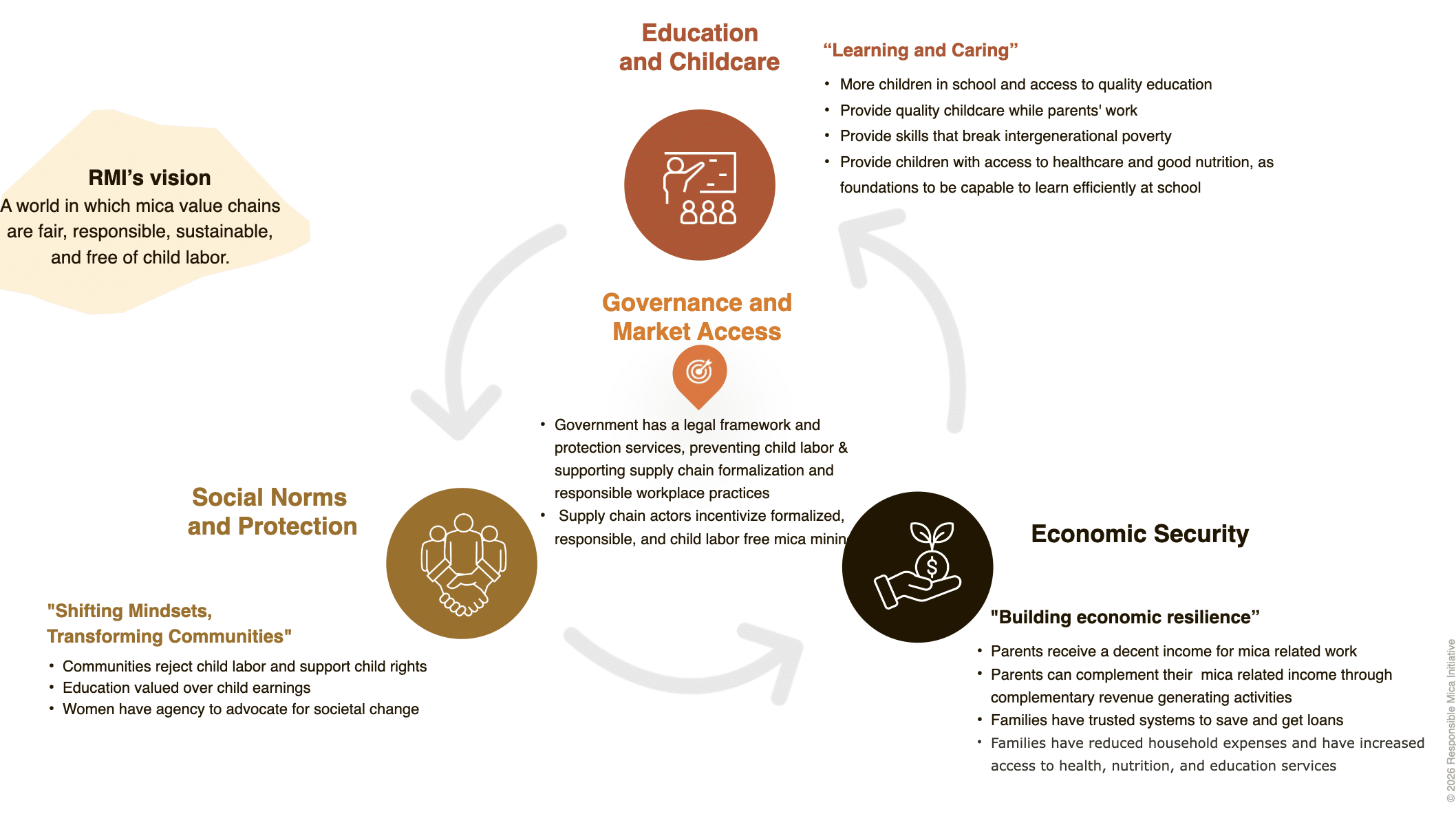
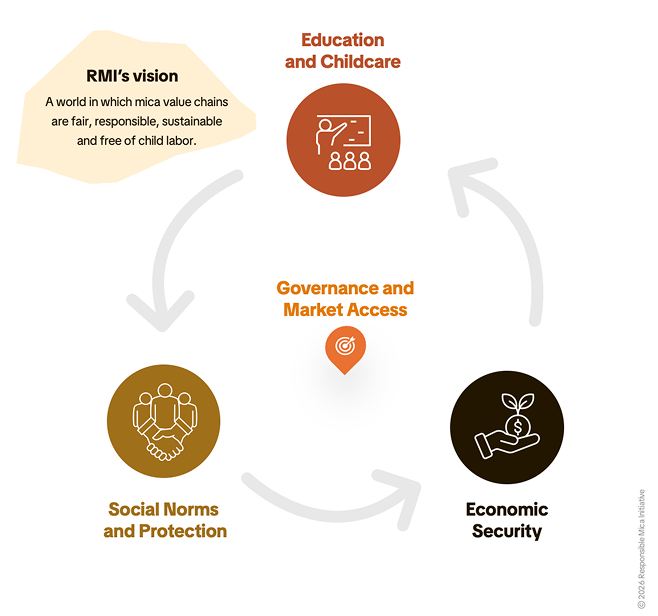
Child labor Theory of Change
The multi-pronged Theory of Change addresses the root causes of child labor – poverty and lack of access to childcare and education which are the most urgent needs of affected communities – and the longer systemic changes that are needed such as access to formal markets and safer workplaces. In combination, RMI programs will create an environment where child labor becomes unnecessary, and responsible working conditions are the norm.
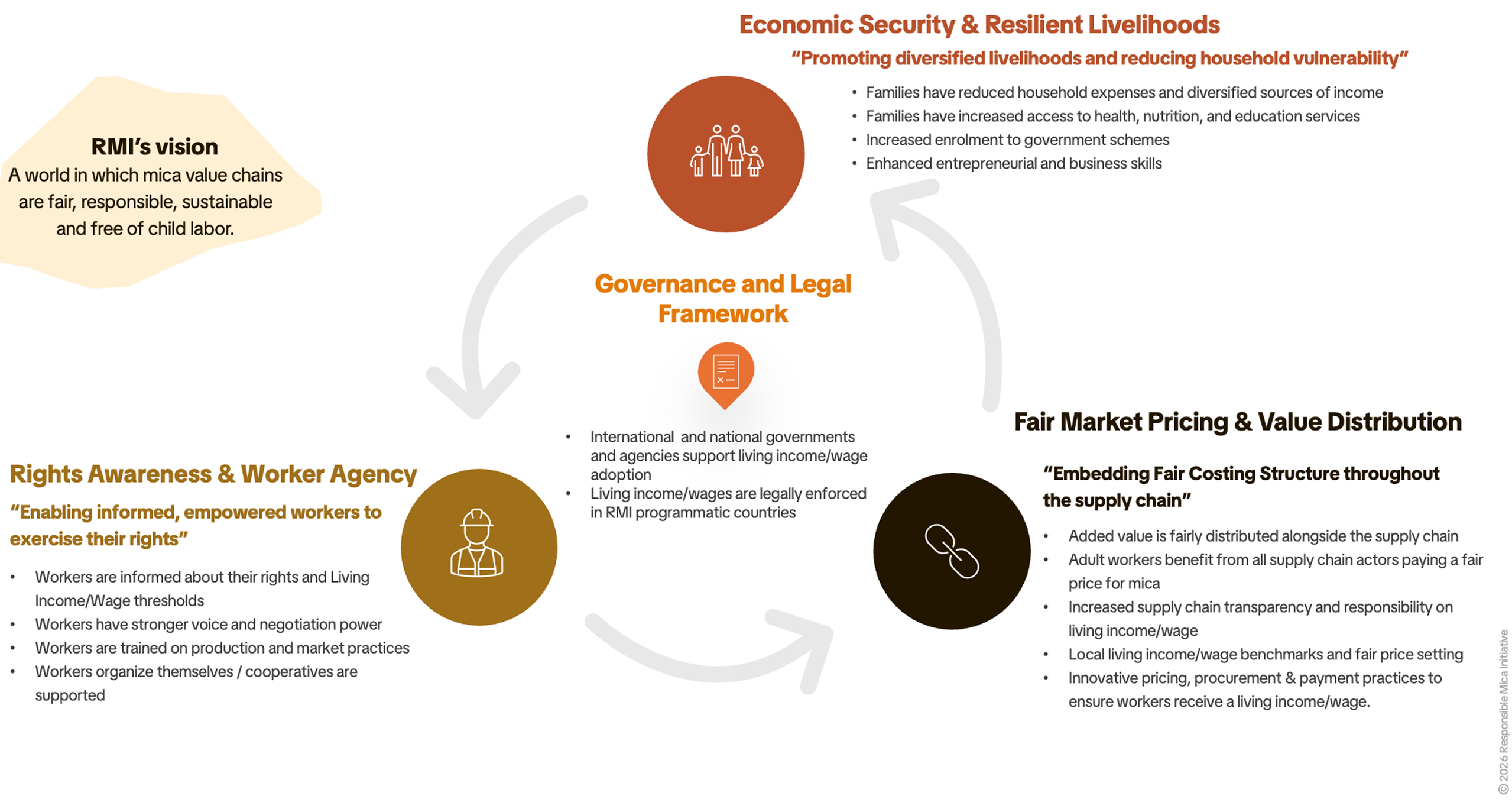
Living wage & income Theory of Change
The multi-pronged Theory of Change addresses the root causes of low wages and incomes – mica dependency, informal markets, lack of worker agency – and identifies the changes needed, including fair supply chain pricing practices, increased legalization of mining activities, and informed, empowered, and trained mica-workers which when combined will create an environment where members of mica-dependent communities receive at least a living wage or living income and where responsible working conditions are the norm.
This website uses cookies to improve your experience. AcceptReject
Privacy & Cookies Policy
Privacy Overview
This website uses cookies to improve your experience while you navigate through the website. Out of these cookies, the cookies that are categorized as necessary are stored on your browser as they are essential for the working of basic functionalities of the website. We also use third-party cookies that help us analyze and understand how you use this website. These cookies will be stored in your browser only with your consent. You also have the option to opt-out of these cookies. But opting out of some of these cookies may have an effect on your browsing experience.
Necessary cookies are absolutely essential for the website to function properly. This category only includes cookies that ensures basic functionalities and security features of the website. These cookies do not store any personal information.
Any cookies that may not be particularly necessary for the website to function and is used specifically to collect user personal data via analytics, ads, other embedded contents are termed as non-necessary cookies. It is mandatory to procure user consent prior to running these cookies on your website.