
Advancing safer working conditions across the mica supply chain
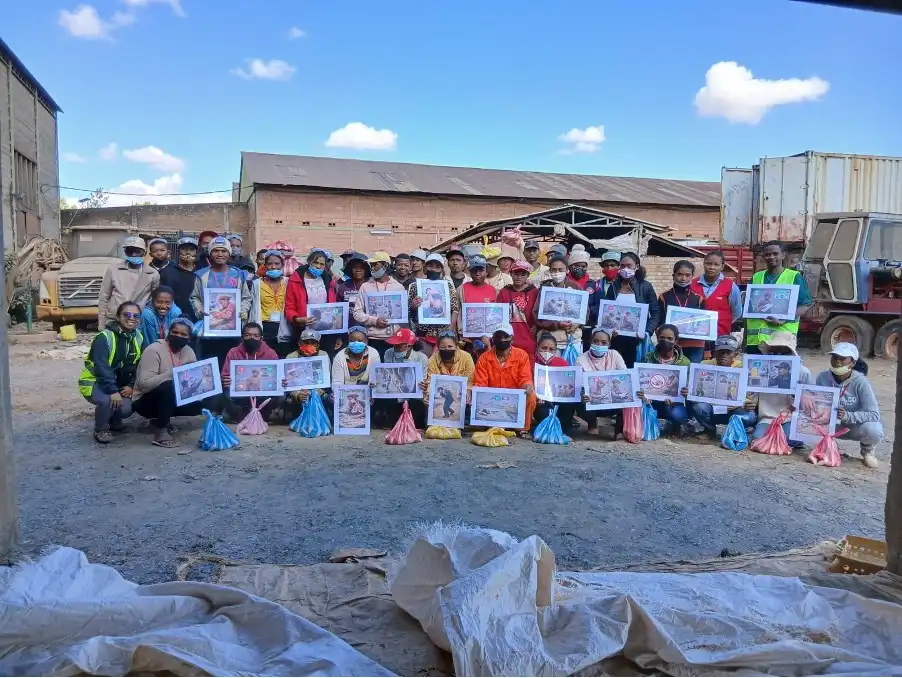
As part of its commitment to improving working conditions throughout the mica supply chain, the Responsible Mica Initiative (RMI) recently organized occupational health and safety (OHS) training sessions at two mica sorting facilities in Madagascar, operated by ZOARA and RIMCO.
The sessions brought together approximately 100 workers and focused on practical measures to improve workplace health and safety. The initiative reflects RMI’s broader efforts to promote responsible sourcing while supporting tangible improvements in workers’ wellbeing, safety, and dignity.
Understanding occupational risks at mica sorting facilities
Addressing everyday workplace hazards
While mica sorting facilities do not face the same risks as mining sites, workers are exposed to a range of occupational hazards. These include dust exposure, repetitive movements, manual handling of materials, slips and falls, and other workplace accidents.
The training aimed to increase awareness of these risks and strengthen workers’ ability to prevent accidents and protect their health. By improving understanding of workplace hazards, RMI is helping create safer and healthier working environments across the mica value chain.
Building practical health and safety skills
From awareness to prevention
During the sessions, participants discussed good workplace practices and practical strategies to reduce risks in their daily activities. Key topics included:
- Proper use of personal protective equipment (PPE)
- Safe handling and lifting techniques
- Prevention of slips, trips, and falls
- Appropriate responses to incidents and injuries
- Reducing exposure to dust
- Maintaining clean, organized, and safe working environments
Particular attention was given to minimizing dust exposure, an important consideration in mica processing activities. Workers and site managers exchanged experiences and discussed practical measures that can be implemented to improve safety on site.
Supporting compliance with the Global Workplace Standard
Preparing for continuous improvement
The training sessions also provided an opportunity to review key occupational health and safety requirements under RMI’s Global Workplace Standard (GWS).
Workers and site managers discussed existing practices, identified areas for improvement, and explored actions that can strengthen compliance ahead of future audits and assessments. This collaborative approach supports continuous improvement while helping facilities meet responsible sourcing expectations.
Strengthening responsible mica supply chains in Madagascar
Occupational health and safety remains a core component of responsible sourcing. By strengthening awareness among workers and supporting companies in the implementation of safer workplace practices, RMI contributes to improving working conditions and promoting more responsible mica supply chains in Madagascar.
These training sessions form part of RMI’s broader commitment to ensuring that responsible mica production is accompanied by tangible improvements in workers’ wellbeing, safety, and dignity throughout the value chain. Through continued collaboration with companies, workers, and local stakeholders, RMI remains committed to advancing safer workplaces and sustainable change across the mica sector.