
In southern Madagascar, access to education remains a major challenge for many mining communities. In the Evango and Besakoa areas, a large number of children currently have no access to school and are regularly present on mining sites alongside their families.
To address this situation, a joint project has been launched by the Responsible Mica Initiative (RMI), Carco, Glory (Funding Partner), and Rimco (Implementing Partner), combining financial support, coordination, and field implementation for the construction of a school near the Evango mining site.
This initiative is part of a broader effort to strengthen responsible mica supply chains by addressing one of the root causes of child labor: lack of access to education.
The project includes the construction of:
-
- a classroom with a capacity of up to 60 students,
-
- a nursery structure for younger children,
-
- sanitary facilities.
> These infrastructures are designed to provide a safe and accessible learning environment adapted to the needs of the community.
Beyond infrastructure, the project also integrates key support components to ensure effective school access and continuity. These include the provision of school furniture, the distribution of school kits, and the funding of a teacher for an initial period, enabling children to enroll and attend classes under appropriate conditions.
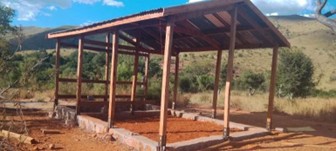
Construction works started at the end of February 2026, following preparatory steps carried out in collaboration with local communities and authorities. As of mid-April, progress is well underway, with the main classroom structure significantly advanced and complementary facilities such as the nursery and sanitation blocks progressing in parallel.
The location of the school, close to both the village and the mining site, is a key factor in ensuring accessibility for children and reducing the likelihood of their presence on mining sites during working hours.
This project reflects a coordinated approach combining financial support and field implementation to address structural challenges faced by mining communities. By improving access to education and supporting community engagement around schooling, this initiative contributes to reducing child labor risks while strengthening the long-term resilience of mining communities.
Scaling this type of impact requires more actors to engage. Targeted, supply chain–linked funding models like this one demonstrate how companies can directly contribute to addressing root causes of child labor in the communities connected to their sourcing.
We encourage companies across mica supply chains to take similar action by investing in concrete, community-based solutions that create lasting change where it matters most.