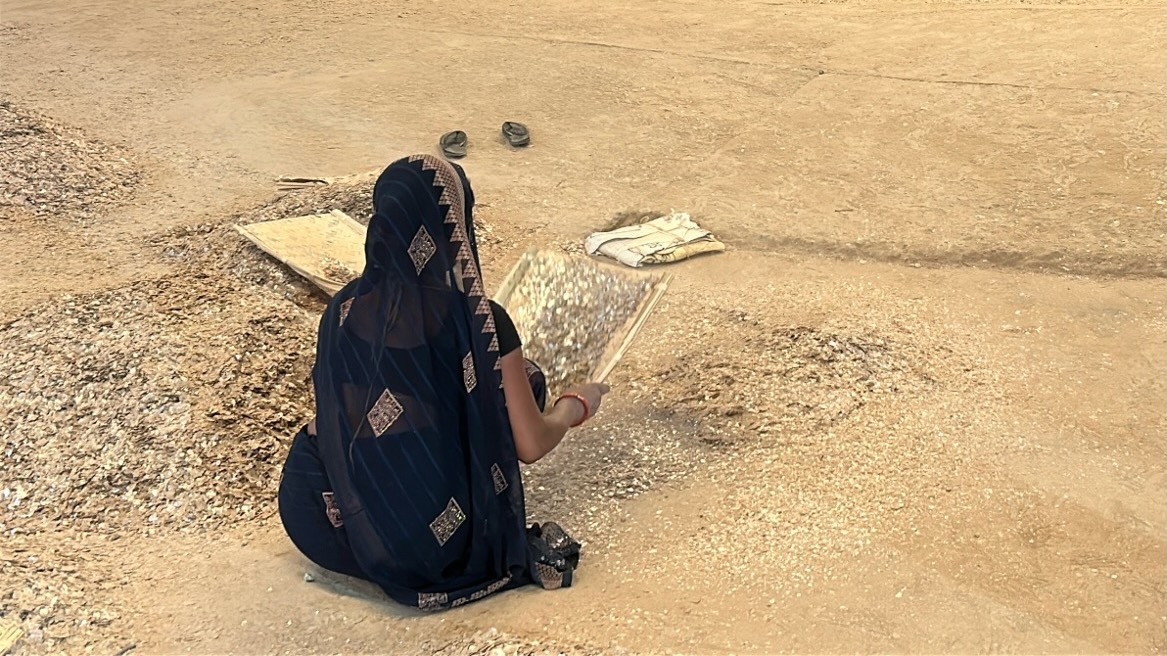

In Nawadih village, in Jharkhand’s Giridih of India, Puniya Devi and her 7-member family had long relied primarily on collecting dhibra, small scrap pieces of mica, and taking daily-wage work whenever it was available. With both sources of income irregular and unpredictable, covering everyday household expenses and planning for her children’s education and nutrition was challenging.
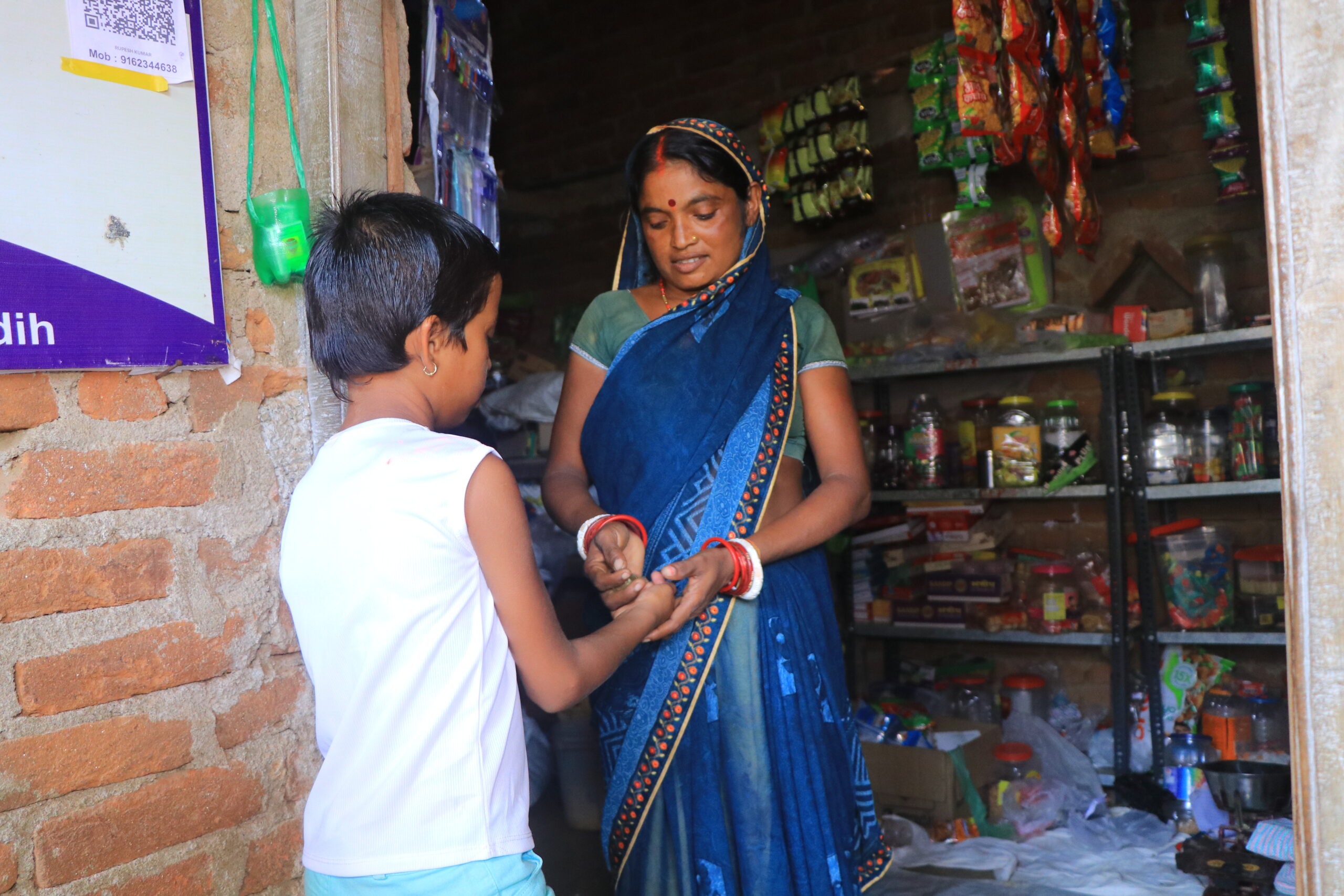
Today, Puniya Devi is building a different future for her family by running her own small grocery and essential-items shop.
Her journey began through RMI’s Community Empowerment Program, implemented locally by Abhivyakti Foundation with support from the Responsible Mica Initiative (RMI).
An initial investment that opened a new opportunity
During a meeting of the local Gram Vikas Samiti, or Village Development Committee, community members discussed the possibility of supporting Puniya Devi in establishing a small shop in her village. Through RMI’s Community Empowerment Program, she received approximately ₹20,000 (€190) worth of shop-related materials, giving her the initial resources she needed to start her business.
Today, Puniya Devi earns around ₹400–₹500 (€3.81-€4.76) a day, helping her family meet daily needs and enabling her to contribute more consistently to her 3 children’s education. And the business continues to grow.
Supporting communities to build more resilient livelihoods
Puniya Devi’s experience illustrates an important principle behind RMI’s Community Empowerment Program: meaningful change can begin with local and relevant support.
Through the program, Abhivyakti Foundation, with RMI’s support, provided Puniya Devi with the initial assistance to establish her livelihood. Her determination and her family’s involvement have enabled her to build on that opportunity, increase her income-generating capacity and continue investing in her business.
For mica-producing communities, livelihood diversification can help families develop additional sources of income and strengthen their economic resilience. Puniya Devi’s story shows what this can mean at the individual level: greater stability, increased confidence and a stronger foundation for her children’s future.
Watch Puniya Devi’s video testimony: