
ABOUT RMI / GOVERNANCE

Transparent and inclusive governance for responsible mica supply chains

The Responsible Mica Initiative (RMI) operates under a governance model designed to ensure balanced representation, accountability, and collective decision-making across all parts of the mica supply chain. 

Creating synergy across industry and civil society

By bringing together members of industry, civil society, and both government and non-governmental organizations (NGOs), RMI provides stakeholders with a strong voice in shaping a more responsible, transparent, and sustainable mica sector.

Representing all members and setting RMI’s strategic direction.

Elected by the General Assembly to oversee governance and performance.

Which translate strategy into on-the-ground impact.

Board of directors 

Ensuring the implementation of RMI's strategy

RMI’s Board of Directors is composed of rotating members elected for two-year terms from across the mica value chain – including companies, industry associations – and civil society organizations (CSOs and NGOs). 


The Board is responsible for ensuring the proper implementation of the RMI’s strategy and action plans, as defined and voted on by the General Assembly. 
Elected Board members form the General Secretariat, which provides operational oversight and includes a President, Vice-President, Secretary, Treasurer, and other administrative officers. 

Our team

Running RMI's programs on the field

Daily operations of RMI are managed by our team that is responsible for implementing directives from the semi-annual General Assembly, monthly input from the Board of Directors, and regular support from RMI member Action Groups. 

Governance resources

Download resource

(PDF format – for a Word version, please contact RMI Executive Team) 

Download resource

(PDF format – for a Word version, please contact RMI Executive Team) 

Download resource

(PDF format – for a Word version, please contact RMI Executive Team) 

Download resource

(PDF format – for a Word version, please contact RMI Executive Team) 

Download resource

(PDF format – for a Word version, please contact RMI Executive Team) 

Download resource

(PDF format – for a Word version, please contact RMI Executive Team) 

Download resource

(PDF format – for a Word version, please contact RMI Executive Team) 

Member taskforces

RMI’s collaborative approach is strengthened by Taskforces, made up of member organization experts 
who contribute their time and technical knowledge to support RMI’s programs. 

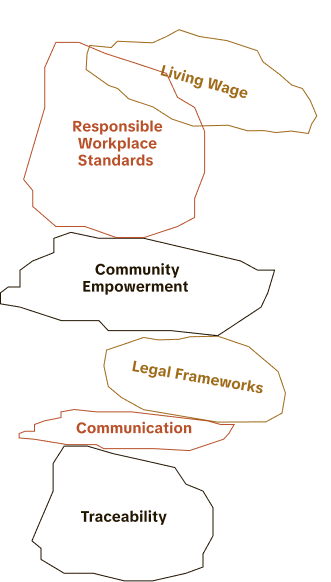
Participation is voluntary and based on members’ expertise across key focus areas: 

Through these working groups, RMI members actively co-create solutions and share
technical insights to strengthen responsible mica sourcing. 

Financial Transparency 
and Accountability

RMI is committed to transparent and responsible financial management that reflects its nonprofit mission. 

Each year, a certified chartered accountant closes the RMI’s accounts, which are then shared with all RMI members. Key financial figures are also shared externally, in RMI’s Annual Reports.

Membership dues are scaled according to company revenue, with safeguards to ensure fairness:


  • Caps prevent disproportionate contributions from larger companies.
  • Special conditions apply to industry associations, NGOs, and small upstream suppliers in India and Madagascar, recognizing their limited financial capacity and operational contributions.  

Budget allocation 2025: 

€1,584,000 (77%)

Program delivery in India and Madagascar 
(RMI’s three program pillars) 

€478,000

Management, administration, 
and travel 

€591,000

Remaining funds – Reserve contributions and other 
operating costs 

Budget allocation 2025: 

€1,584,000 (77%)

Program delivery in India and Madagascar 
(RMI’s three program pillars

€478,000

Management, administration, 
and travel 

€591,000

Remaining funds – Reserve contributions and other 
operating costs 

RMI closed 2025 with a budget surplus, maintaining a capital reserve

of €591,000 after nine years of operation

reinforcing long-term stability and accountability.

Competition policy

RMI is not a buyers’ group and operates under 
the Chatham House Rule to ensure open yet confidential discussions. 

All members adhere to the RMI Competition Charter, which sets clear rules for responsible participation, including: 


  • Compliance with all applicable competition laws
  • A commitment to avoid anti-competitive practices
  • Protection of confidential and sensitive information obtained 
through membership 

This framework safeguards collaboration while upholding fair competition and ethical conduct throughout the mica supply chain.